fpt logo

High-end automation in the automotive sector

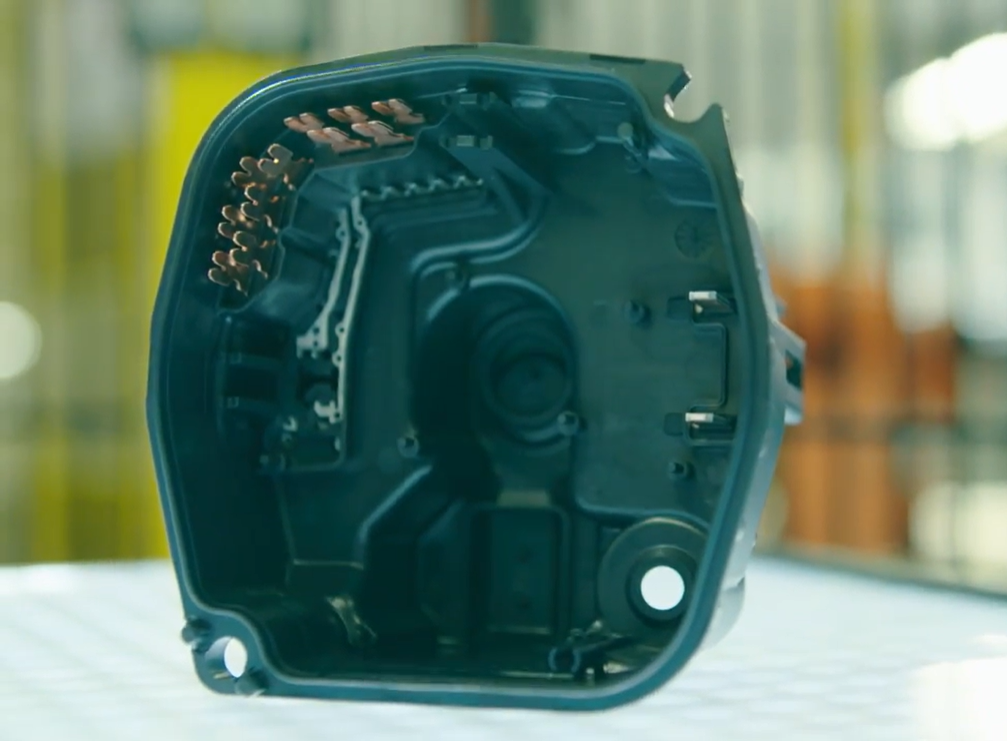
Production and testing of a hybrid component with 85 inserts

The highlights at a glance
Elimination of semi-finished products and tools, independence from geometry and volume thanks to low fixed costs and optimized warehousing, digital process chain with fast response times and short distribution channels, „just-in-sequence“ finishing“
Modular system concept with a high proportion of re-use
Reuse of automation components when changing products
Later expansion options taken into account in the concept
Successive system commissioning on site at the customer's premises
Interface management between the project participants
Precise handling of intricate products, even with large part variance
The project
The challenge

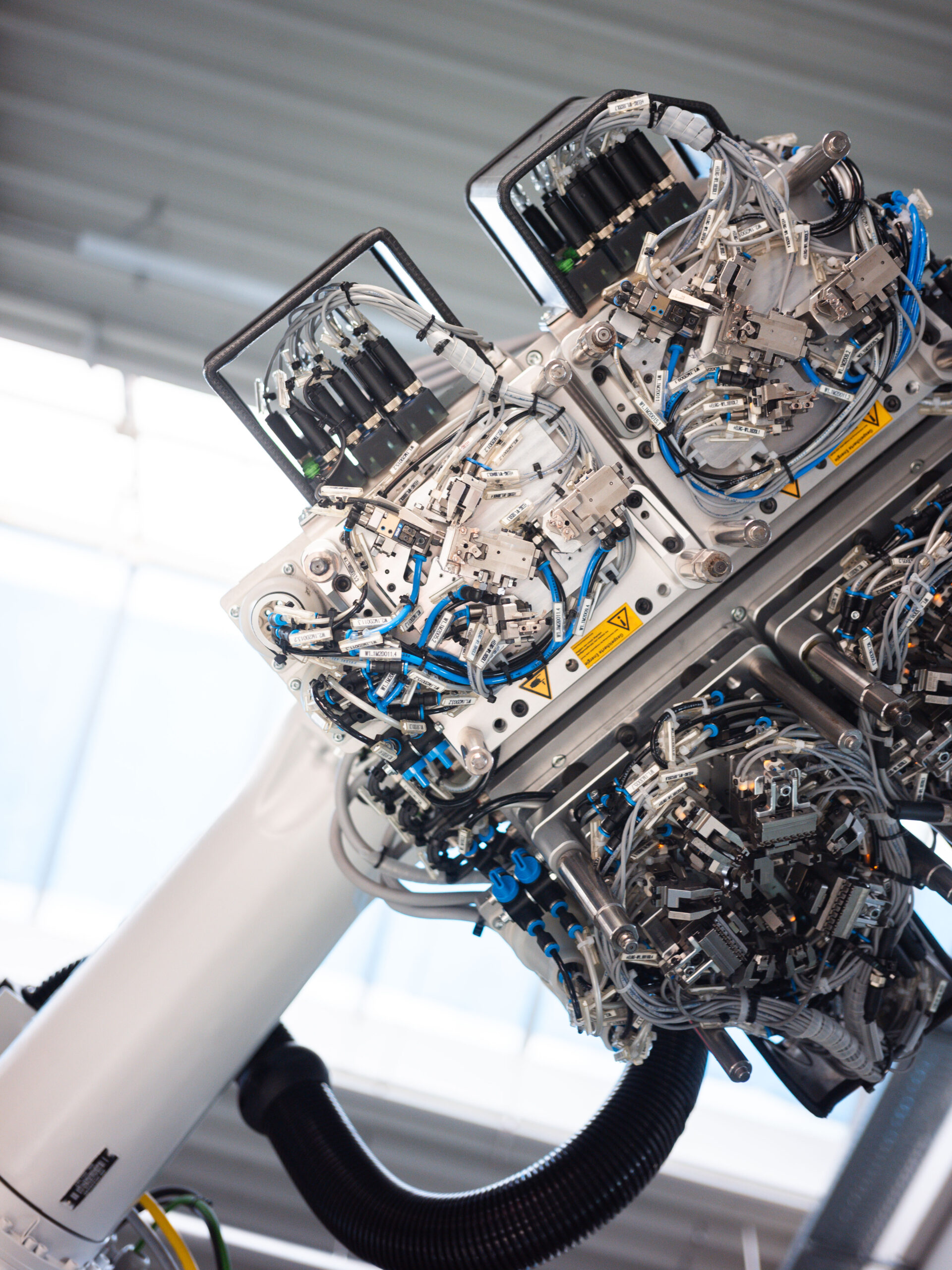
Dhe component of the end customer was was initially assessed as not feasible in terms of production technology. Our customer, in turn, was thus in the field of automation in particular, we face a challenging task. The high number of inserts - 85 in number - had to be reliable and automatically into the mold. This complex task required a completely new approach to the automation solution both conceptually and technologically. Each Cycle shouldten 4 injection-molded components and therefore inside Total 340 individual parts traded become. Ea Task, that only work as part of a sophisticated overall concept can. 

The solution

One High-end automation solution with a well thought-out system layout that smoothly links the various process steps with each other and so a reliable production and quality assurance. 

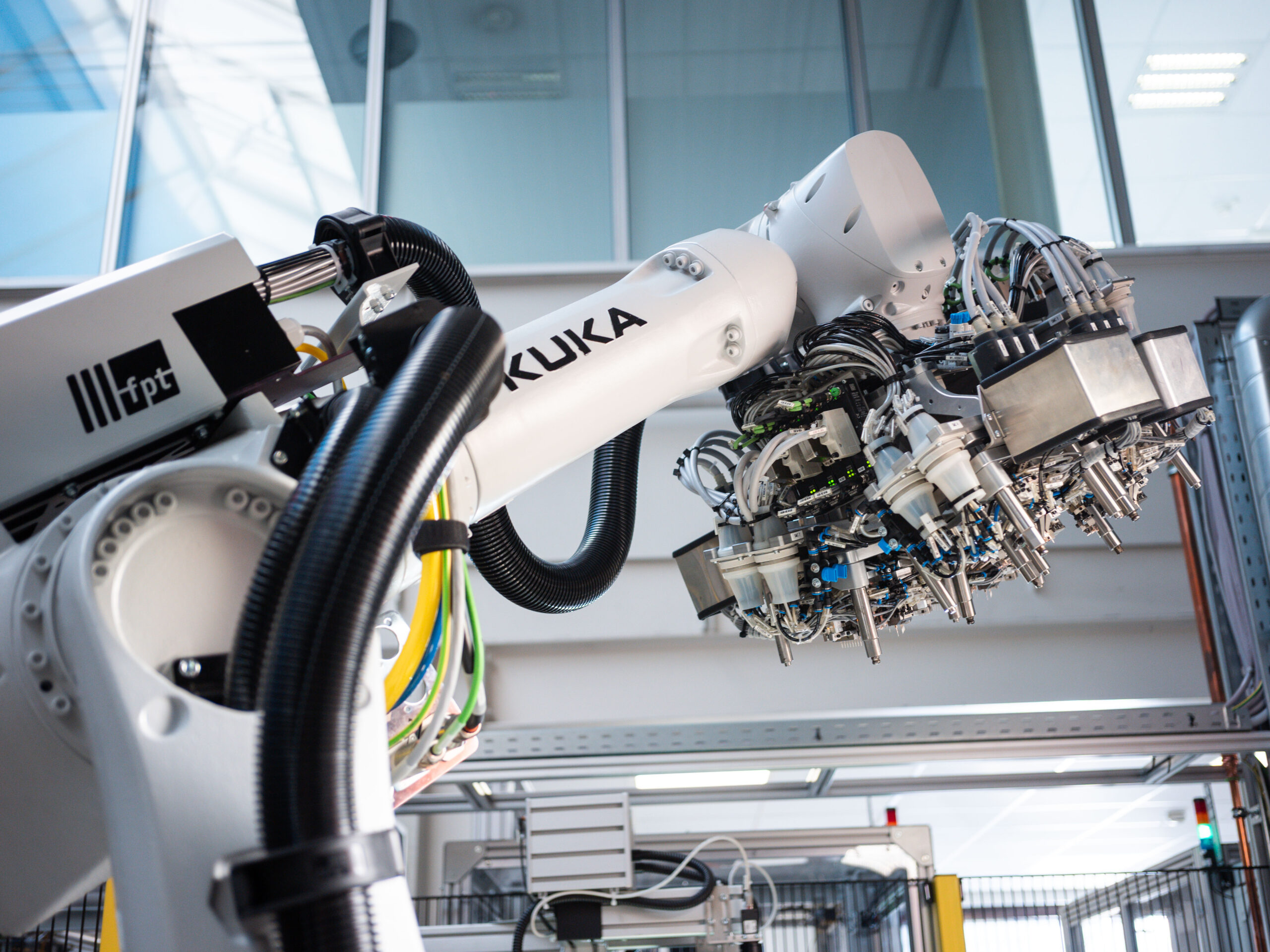
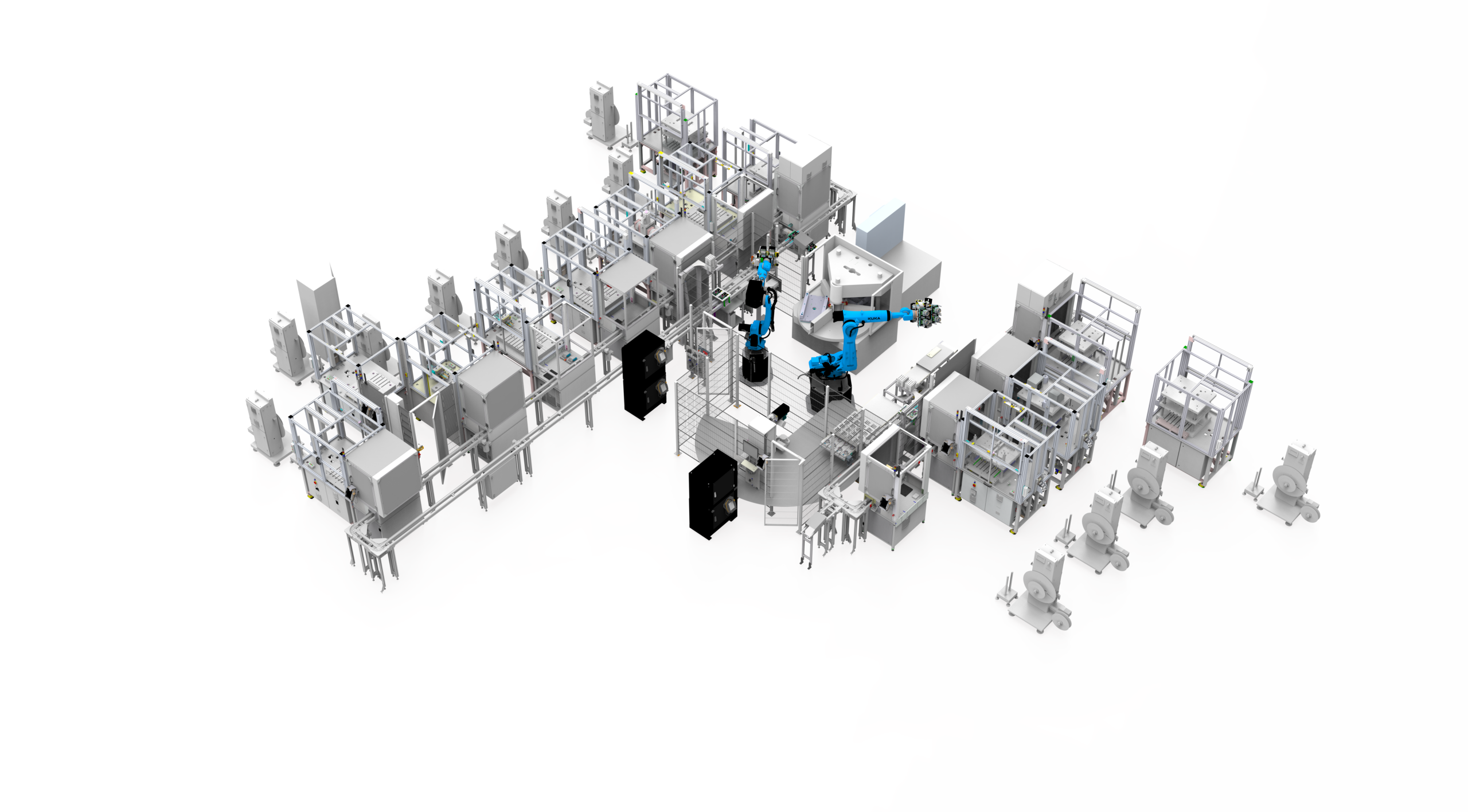
A total of eleven processing cells are used in the reprocessing area - connected by a workpiece carrier system. The basic principle is similar for all of them: contacts are punched free, removed using linear handling or a robot and placed on the workpiece carrier. The technical details, such as additional intermediate steps, are taken into account individually. A buffer section in front of the injection molding area ensures that the sensitive injection molding process can continue, even if manual intervention is required at one of the preparation cells. At the injection molding machine, two powerful six-axis robots feed the parts into the mold and remove the finished parts. 

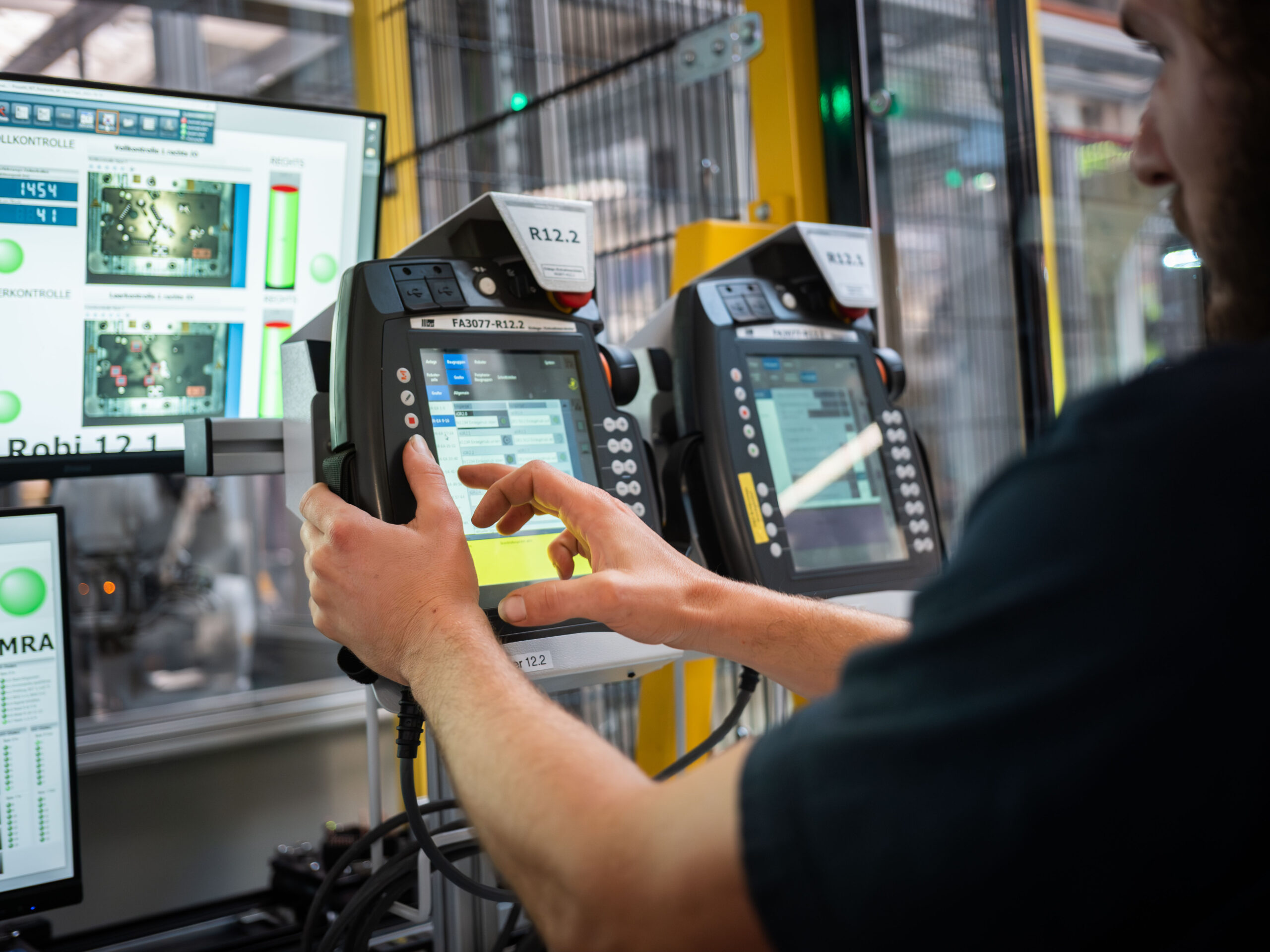
In the modular, separately designed end-of-line area, the finished parts undergo a comprehensive quality check after being fed in manually. The product is transported between the individual inspection stations via an XTS system. Bad parts are automatically sorted out and good parts are packed in trays. 

Contact us

Contact us

Do you have questions or a specific project for which you are looking for support?

Give us a call, write to us or make an appointment directly for a non-binding initial consultation. We look forward to your challenges!

Portrait of fpt robotics sales manager Stefan Waldvogel
Stefan Waldvogel
Head of Sales
+49 (7520) 9513 - 616
Send e-mail
E-mail address FPT